


When we analyze the mechanics of live TV games like Cash or Crash Live, we encounter elements intended to give players a sense of influence within a high-risk environment https://cashorcrashlive.net. The Block tool shines as amongst the most significant strategic tools accessible to UK players. Different from the central game of luck, where a unpredictable multiplier can collapse at any point, the Block allows a user to preemptively ‘lock in’ a share of their possible gains before the inevitable crash takes place. It converts a completely spectator session into a more involved, strategic version. We see its use as a critical risk-control approach, differentiating casual play from more calculated methods. For the UK players, where playing is often perceived through a prism of both entertainment and savvy engagement, becoming proficient in this function is crucial to managing the game’s built-in conflict between desire for more and protection.
What the Block Function Actually Entails
At its core, the Block function in Cash or Crash Live is a basic but effective safety mechanism. During a round, as the multiplier goes up, a participant can hit the Block button to lock in a part of their possible payout. This step creates a secure baseline for that round’s winnings. If the round crashes at a value below where they placed their block, they are still awarded the blocked amount. If the game soars past the block point, their potential earnings keep increasing, but the blocked sum is safe. It’s important to realize that using the Block does not end your participation during that round; your current multiplier stays in play, yet you’ve got a safety cushion. We consider this two-state gameplay—having safety while remaining active—as the mechanism’s psychological draw. For British players, it directly addresses the timeless issue of deciding when to cash out, a concept familiar from everything from the stock market to a tense round of a pub quiz.
Well-planned Pacing for UK Players
Strategic use of the Block centers on pacing, and UK players often develop habits according to seen gameplay patterns and individual risk appetite. There exists no universally perfect time, which is why it is a topic of such debate. Many suggest an early block, maybe at a small 1.5x or 2x multiplier, to guarantee a tiny but steady return, building a bankroll gradually and securely. Some, seeking larger profits, will allow the multiplier go significantly higher before deploying their block. We find the fact that many seasoned players in the UK employ a mixed method, adjusting their block threshold according to the behaviour of previous sessions. For instance, after several consecutive small multiplier crashes, a few may block earlier, expecting a pattern. On the other hand, upon a huge multiplier, the next session could witness participants delaying their block, hoping for a repeat. The key is that the choice is active and contextual, transitioning the user from a mere spectator to an active decision-maker, handling their own exposure.

Mental Impact on Play
The introduction of the Block feature fundamentally alters the emotional state of Cash or Crash Live. Without the Block, the game is a pure test of nerve, a all-or-nothing “cash out or bust” outcome that commonly causes regret—caused by quitting too soon or busting out. The Block mitigates this by offering a third, soothing choice. This feature reduces the anxiety of losing everything, which in turn can promote calmer and more gainful decisions. We observe that UK players using the Block often report feeling more in control, which enhances their enjoyment and engagement with the game. However, it also introduces new forms of emotional strain, such as the vexation of blocking at 3x only to watch the multiplier climb to 10x. This “fear of missing out” (FOMO) is a powerful force, and learning to control the emotional response to a successful or poorly timed block is just as vital as getting the timing right.
Common Blocking Mistakes to Avoid
Through our analysis of gameplay, we’ve noted several frequent pitfalls UK players should be mindful of when using the Block. The most prevalent mistake is blocking out of fear at the first sign of a rising multiplier, often at a level so low it barely compensates the initial stake. This negates the function’s objective of securing significant profit. Conversely, greed leads to the fault of never blocking at all, treating every round as an all-or-nothing gamble, which statistically erases gains over time. Another subtle error is positioning the block at a round, psychologically significant number like 5.0x, which many other players are also prone to use. If a crash is engineered to frequently occur just below such widespread thresholds, this strategy can backfire. We advise players to adjust their block points and ground them on a pre-defined strategy rather than emotional impulses during the midst of the round.
Comparing Block to Auto-Cash-Out
It’s essential to distinguish the Block function from the individual Auto-Cash-Out feature, as UK players occasionally conflate the two. Auto-Cash-Out is a set-and-forget tool where you preselect a multiplier at which your entire bet is instantly cashed out, terminating your involvement in that round completely. The Block function is more refined. It does not end your round; it simply secures a segment of your winnings while your live bet continues to ride. This implies you can still profit from a climbing multiplier after blocking, which is impossible with Auto-Cash-Out. We view Auto-Cash-Out as a tool for control, imposing a rigid profit target. The Block, however, is a tool for risk management and opportunity optimisation. A experienced UK player might use both in tandem—for example, establishing a moderate Auto-Cash-Out at 10x but using a manual Block at 4x to secure a base profit well before that target.
How UK Guidelines Affect Feature Use
The application of features like the Block does not happen in isolation; it is defined by the UK’s strict gambling regulations and responsible gaming framework. The UK Gambling Commission requires that games provide clear information and features that foster player control. The Block function is in perfect alignment with this philosophy, as it is a practical tool for controlling risk and limiting losses. Furthermore, the availability of detailed game stats and history, which UK-licensed sites are required to provide, feeds directly into Block strategy. Players can review past rounds to inform their timing, adding a layer of analytical play. We also observe that the UK sector’s focus on transparency means the mechanics of the Block are clearly described, eliminating misinterpretation. This framework of regulations promotes a more measured, strategic approach to the game, where the Block is seen not merely a button, but a key element of informed play.
Developing a Individual Block Approach
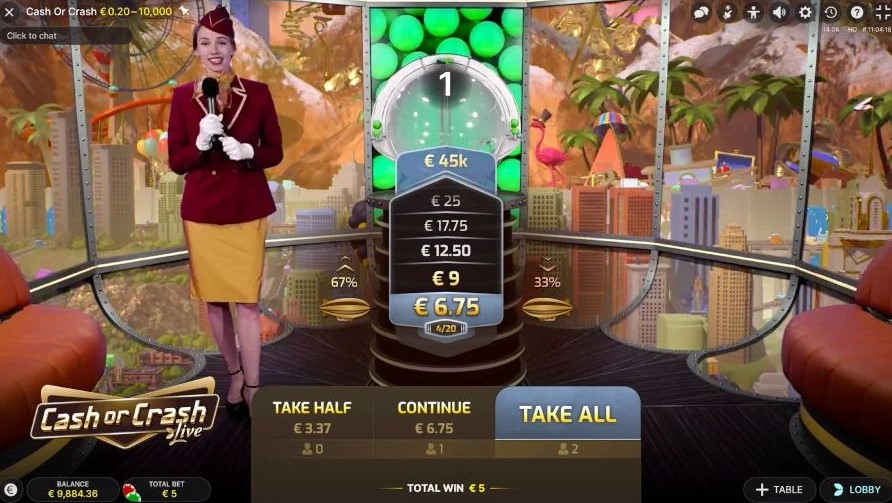
Formulating a unwavering custom strategy for the Block is the hallmark of a careful Cash or Crash Live player in the UK. We advise starting with a bankroll handling plan: decide what fraction of your session stake you are ready to risk per round and what constitutes a successful profit target. Your Block strategy should serve these goals. One method is the “tiered block,” where you block a small percentage of your potential winnings at a small multiplier, another portion at a middle multiplier, and let the remainder ride. Another is the “fixed profit” plan, where you compute the exact multiplier needed to secure a set profit and stop there every time, disregarding the temptation of larger multipliers. Crucially, any system must be documented and stuck to before you start playing, as in-play emotions will hinder reasoning. The Block is a powerful tool, but its potential is only unlocked through disciplined, pre-meditated application.
